Visit the Rest of The PPDRDG by Returning to the Site Map and Picking Another Page!
The Provisional Peoples' Democratic Republic of Diego Garcia, a.k.a. PROPEOPDEMREPDG; a.k.a. PPDRDG (The Web Site Providing the World With Its Diego Garcia Fix Since August 20, 1998) The PPDRDG Thanks Everyone who Helped SAVE THE CHAGOS ARCHIPELAGO! Go to ProtectChagos.org! |
 |
|
|
Those of
you who have read this website over
the years know of my love for the natural beauty and environment of
Diego
Garcia and the rest of the Chagos Archipelago. You may not know it, but
Diego
Garcia is the largest continuous atoll in the world, and the Chagos
Archipelago
is the 2nd largest living reef anywhere (after the Great Barrier
Reef).
Ecologically, it is critical to the health of the Indian Ocean, and a
key
bell-weather for detecting marine environmental problems and in
determining if
climate change is actually happening and if it is, to what
extent. Those
of us who spent time out there remember the unpolluted waters, the
unspoiled
reefs, the clean air, and the abundant birds, wildlife and sea
life.
These are the classic signs of a healthy environment! Because of
its remoteness, lack of any
population trying to make a living off the natural resources of the
archipelago, the wise environmental regulation by the Brits and the
DoD, and
the care taken by the American and British Sailors, Marines, Airmen,
contractors and Merchant Marines over the last 40 years, the Chagos
Archipelago
is the most pristine marine environment in the Indian Ocean, if not the
world. On
November 10, 2009 the British Foreign
Secretary, David Miliband, announced that the UK Government was seeking
comments on a proposal to preserve the Chagos that way forever and for
all
mankind by creating the world’s largest Marine Protected Area (MPA) -
at
210,000 square miles, it would be twice as big as the whole UK itself -
bigger
than New England, New York, New Jersey, Pennsylvania, Maryland and
Virginia put
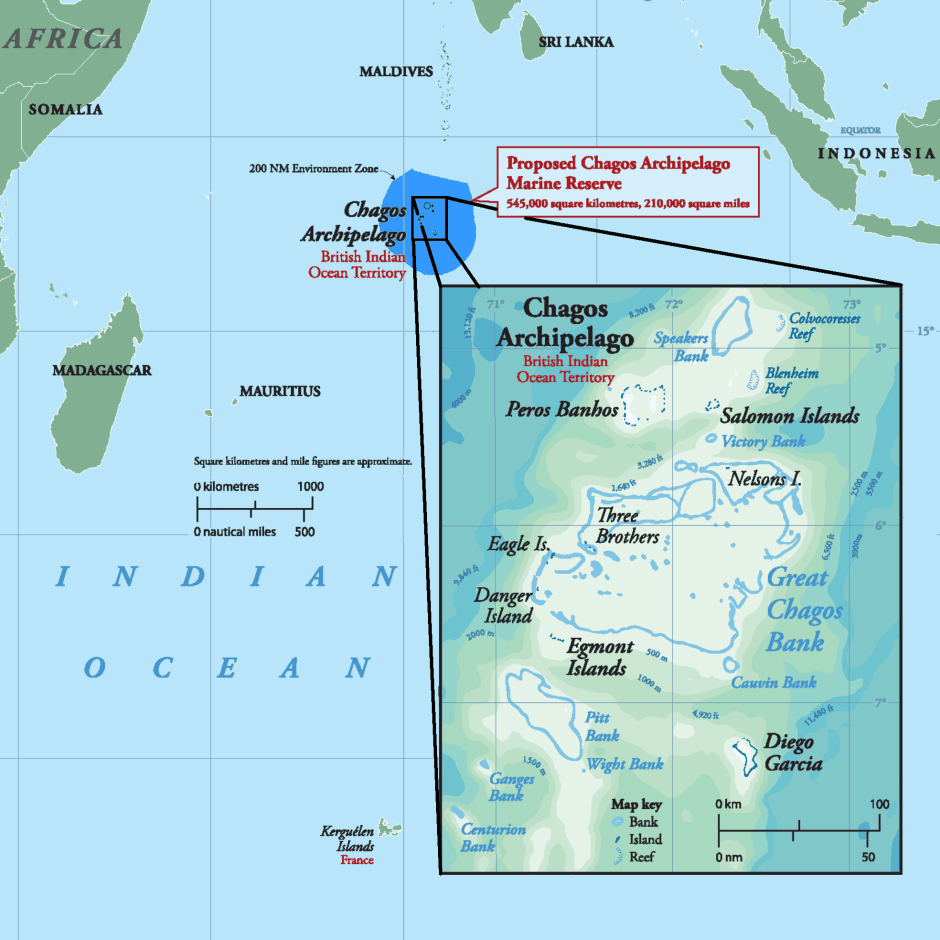
together! There is a map at
the bottom of this page. He went on
to say, "I strongly encourage
you to participate in this consultation." By that he meant the
whole
world could comment, and that included veterans of Diego Garcia!
After
all, there are over 100,000 of us, and we sacrificed a big portion of
our lives
out there defending the free world, and it's was only right that many
of us
spent a few moments to help protect the place that meant so much to us
once
upon a time! In the end, over 275,000 people
world-wide sent in
comments and signed petitions, with 90% favoring the creation of the
MPA (I
mean, what in the world were the other 10% thinking?), and on
April 1,
2010, the Foreign Minister announced that the UK would establish the
MPA.
Here's the news release: http://www.fco.gov.uk/en/news/latest-news/?view=News&id=22001512.
And here is the full 30-page report: http://www.fco.gov.uk/resources/en/pdf/3052790/2010/marine-life-apr-2010. |
||
|
Like most of my readers, I spent a
lifetime on Diego Garcia one year, and therefore feel uniquely
qualified to make
random pronounciations about DG and all things around or about
it. Plus
I've been running a website about the darn place for more than a
decade, so I'm doubly qualified. So, here's what I think about:
FAQs
About the Chagos Protected Area
This set of Q&As was collected from several people intimately involved with the MPA and the science of the Chagos. If you can think of any other Big Question that needs an answer, please don't hesitate to ask me to include your Question and find a reasonable answer! Just drop me an email... Given that there are
already protection
measures in place in Chagos, what impact will the Marine Reserve have? This clarifies
several local protection laws that already exist regarding certain of
the reefs and islands, and substantially extends these protections to
the entire archipelago. Why now? Reef resources of the Who has jurisdiction over Chagos, and where does the MPA fit in to its governance? The United Kingdom.
The French settled Diego Garcia in 1793 and administered it from its
colony of Mauritius. The British "captured" it by invading and
conquering Mauritius in 1810 during the Napoleonic Wars, and France
ceded it to the England at the Treaty of Paris in 1814. The
British administered the Chagos archipelago originally as
part of a colony containing
In 1965, Britain paid the self-governing colony of Mauritius £3 million for
the archipelago and established the British Indian Ocean Territory,
administered by the Commissioner of Mauritius. In 1966, the UK
and US executed an "exchange of notes" making the islands available to
both countries for defense purposes through 2016 with a 20 year option
through 2036. When Occasionally there is some question as to when the BIOT will be transfered to Mauritius. The US has consistently (since 2001 at least) stated that the base at Diego Garcia is critical to national defense. So it currently appears that Diego Garcia, if not the entire BIOT, will remain British through 2036, if not longer. Administratively, the BIOT is governed by a single individual, the Commissioner. Each year (sometimes biannually) the US State Department and Department of Defense (DoD) representatives meet with the representatives of the UK 's FCO and Ministry of Defence (MOD) in a series of meetings called The Pol/Mil Talks (standing for Political and Military). During these talks the two sides propose and discuss the future plans for the BIOT and Diego Garcia in particular. Serious issues and those regarding major infrastructure construction projects, are formalized with an "Exchange of Letters" between the two governments.
Ultimately, the BIOT is a British Overseas Territory without a resident
citizenry, and its law is based upon English Common Law, specifically
(found in Section 3 of the Courts Ordinance promulgated by the
Commissioner) "...the law of the Territory shall be the law of England
as from time to time in force in England and the rules of equity as
from time to time applied in England". Be that as it may, here's
where the laws for the BIOT come from: 2. UK Statutes (i.e., made by Parliament) expressly extended to the Territory. 3. UK Statutory Instruments (made by permission of Parliament) expressly extended to or applying to the Territory. 4. Local Ordinances (Statutes) made by the Commissioner under powers granted to him by various Orders in Council (i.e., from the Queen). 5. Local Statutory Instruments (Regulations, Rules, Proclamations, Notices, etc.) made by the British Representative on Diego Garcia (the "BRIT REP"). The MPA falls into #3. How
big is the Chagos Protected Area?
Some literature refers
to the water of Chagos as "Pristine". Is it really? The word implies an aquatic
wilderness, uncorrupted by the intrusions of man, with unspoiled
beaches lapped by unpolluted waves. This essentially describes
the waters surrounding the Outer Islands of the Chagos. Although
beaches are seen contaminated with the plastic flotsam and jetsom that
plagues even the world's most remote shores, the water quality is
beyond pristine. Tested many times by scientific expeditions for
industrial pollutants and heavy metals, there is none - not even one
part per trillion. Diego Garcia and its territorial
waters (making up 1/10th of one percent of the Chagos Protected Area),
with its military complex and as many as 20 large cargo ships anchored
in the lagoon at any given time, is possibly the cleanest inhabited atoll in the world
because of strict environmental and anti-pollution laws and practices
by both the UK and US. The ships in the lagoon are not allowed to
discharge anything into the water, and the sewage treatment system on
the base includes tertiary treatment and disinfection - the effluent
that is discharded into the ocean meets US Environmental Protection
Agency standards for discharge into natural water sources. In the
case of Diego Garcia, it is discharged far out to sea and the dilution
is immediate and complete, so much so that water samples taken at the
outfall do not reveal waste of any kind. Recently, some claims have been made that the lagoon is without a doubt contaminated by radioactive pollutants. These charges have been made because US and UK nuclear powered submarines and ships routinely visit the island and since there have been radiation leaks elsewhere in the world over the last half-century by similar vessels, the lagoon at Diego Garcia must be polluted, and that because there is no international oversight in place on Diego Garcia, the US Navy and UK would automatically cover up any incident that may have occurred. Although I do not personally believe there has ever been a nuclear incident in the Chagos, the US and UK should conduct accepted tests to confirm the matter one way or the other.
Are
Invasive Species a Problem? There are no invasive species in the waters of the Chagos. On land, the story is not the same. Although there are several invasive terrestrial species of note, two are serious pests - rats and coconut. Although coconut is found everywhere in the tropics, on "pristine" islands it is found in balance with the rest of the vegetation. In the Chagos, the native vegetation (which generally consisted of a hardwood forest) was cleared from most major islands to establish the coconut plantations beginning in the 1790s. Rats were inadvertently introduced on many islands and were already noted as a nuisance by the time the French began planting coconuts. Together these two species served to drastically affect the vast seabird colonies - rats as predators, and coconut because the plantation workers considered seabird colonies a major food source as long as they lasted. On those
islands that were too small to be economically converted to plantations
there aresignificant groves of
native trees, and they are often noisy with
seabirds. In contrast, the previously inhabited islands are
silent because of
the introduced predators, and are still choked by an continually
renewing, inpenetrable understory of young coconut that makes it
difficult for the native hardwood forests to re-establish themselves. Of course the invasive predator
at the top of every food chain is man, and his absense from the Outer
Islands, and half of Diego Garcia have permitted terrestrial nature to
"take its course". Fifty years ago, the typical inhabited island
was a beautiful park-like setting of coconuts planted in endless rows
10 meters apart, with a cleared understory of grass and coconut
fronds. Even a cursory look at Google Earth shows those mature
plantings are still there, choked out below by the juvenile
understory. First it was the arrival of man that changed the terrestrial ecology completely, then his departure allowed a new set of species to carve out their niches in a new dynamic. But the absence of man (or in the
case of Diego Garcia, his exclusion from "off-limits" areas) has
benefitted several indigenous species.
Are there areas of particular interest
to scientific research? It is important today to
understand what a reef
system in excellent condition should look like, and this is one of very
few
locations where current interest in reef resilience can be researched,
and it is
a control site also for understanding fish populations and responses to
climate
change. See the list of 200+ science
publications arising from the last few expeditions (www.chagos-trust.org). Is Chagos a useful
reference site to
other scientists for other regions? Chagos is already established as
a reference
point of great importance, with considerable demand from many of the
world’s marine,
environmental scientists. With its establishment as a protected area
and
greater awareness of the need, it is hoped that scientific work will be
increased. Is there any useful deep water biological science from this area? None has yet been done. Funding for such expensive work has always been difficult to obtain, but again with this area being better publicized and protected, this may make such science more attractive to funders Is sea level rise or
increasing storms
likely to become problematic for the islands? Almost certainly, but there are
still uncertainties
surrounding this at present. Work by
consultants nearly a decade ago suggested it would become a serious
problem. Since then there has been
considerable shoreline erosion in many parts. Measured
sea level rise from a short time
series is approximately 8 mm per year or more, which matches much
longer
records from the How will the Chagos
Protected Area
affect the biodiversity or productivity of surrounding areas? Chagos is a refuge for many
species. Early evidence is hinting
increasingly at a
role in seeding, or in being an important stepping-stone for species,
suggesting
that the Chagos is directly linked to the western
Isn't the Protected Area just a ruse to prevent resettlement by the former inhabitants? No. The population was removed about 40 years ago - no conservation justification was needed then. This conservation initiative was declared in April 2010. If or when people return, the area will be in best possible condition. The issue of resettlement of the archipelago is a separate legal issue from establishment and maintenance of the MPA. Should resettlement ever be agreed, it has repeatedly been stated that the provisions of the MPA can be modified as necessary. In the meanwhile, the area will be maintained in best possible condition for any possible future use. There should be no reason to oppose conservation interventions in Chagos just because other political agendas are not met by this badly needed conservation measure. Indeed, conservation is greatly welcomed by most! (Note from the webmaster. Please see my own comments on the islanders below.) What infrastructure is
there and how
many people could return without causing damage, if resettlement did in
fact take
place?
But isn’t it true that conservation with people will be better than conservation without people?
What
is the economic value of the Chagos?
Are there
poaching issues within the MPA? Poaching for sea
cucumbers and sharks has been marked. Pressures
are likely to rise along with the
rising What
are the costs of providing patrol and protection for the MPA? Protection can be achieved for
the same
price as currently is spent on fishery patrol, particularly if better
surveillance information is made available and this is something that
is being
explored. Costs are currently about $5
km2, which is about 10-100 times less than for most coral
reef areas
with protection measures. Provisional,
working documents are available on request. Is any thing about the MPA binding upon the Mauritian government if and when the Territory is ceded over in the future? There is no international law or agreement requiring them to recognize or maintain the MPA. Their official government response to the public solicitation was to not create the MPA.  Patrol
- The Surveillance and Maritime Police
Somebody's
got to patrol the MPA and chase off the poachers and commercial fishing
fleets. In the 1980s, every USN P-3 that launched from DG took a
swing
through the rest of the Chagos, and reported back any suspicious
activities. Then, once a month the Brit Marines would load up on
one of
MSPRON 2's freighters and sail off to check on the islands and the
yachties who
hang out at Salomon Atoll. None of that happens anymore. Here
are some photos of what we need:
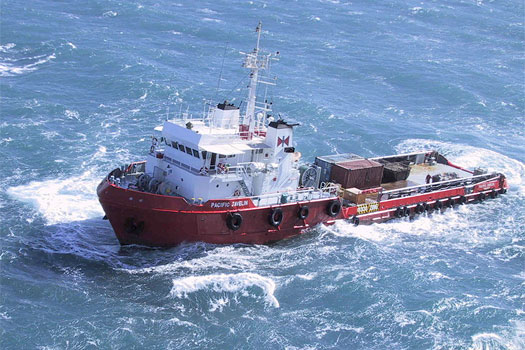 THE MOTHER SHIP 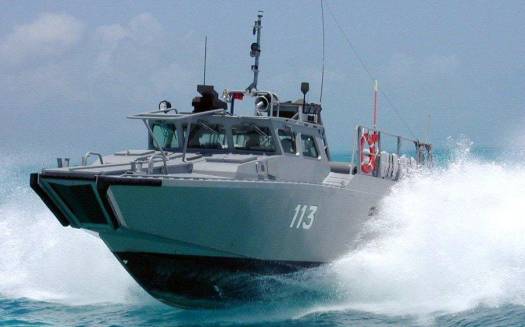 THE PATROL BOAT 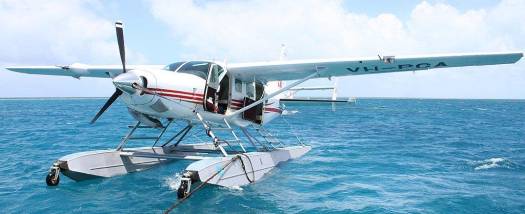 THE AMPHIBIAN |
||
Those
of you who have read my website, or know me personally, know that my
first and
foremost concern is for the defense of the United States and our
democratic
republic. Diego Garcia is essential to that defense, and
therefore
anything that would limit our use of Diego Garcia would not receive my
support. But the British Government does recognize DG's critical
place in
the defense of liberty and freedom. Here is what the FCO proposal
had to
say about the joint American and British use of Diego Garcia as a major
base in
the defense of freedom (see page 12 of
the Consultation Document): What
does this mean to you? It means that Diego Garcia out to the 3
mile limit
will continue to be environmentally protected while still serving as
the
important fleet and air base we all rely on in today's fight, and in
preparation for any contingencies that may come about in the
future. I
support such an exemption, and you should too. |
||
The Scientific Research Station and Monitoring Sites In progress... |
||
|
Sport Fishing Please
note that since 1998 the BIOT government has regulated recreational
fishing on
and around Diego Garcia, and placed most of the lagoon and outer waters
off
limits to fishing. However, unless the proposed MPA includes
an
exemption for DG's territorial waters, it would ban all
recreational
fishing by personnel stationed on Diego Garcia. I believe that
the
research to date shows such a ban is unnecessary for the environmental
health
of the Chagos (see Chapter 7 of
the BIOT's Conservation Management Plan). If you want them to talk about recreational fishing, you should write letters to your Commanding Officers, the Secretary of your service, and the Secretary of State. Otherwise, they won't and you'll get to sit on the beach and wish you had something to do. |
||
The Chagos Islanders I
also support the Diego
Garcian Society (DGS)
and its desire to maintain a physical relationship with the homeland of
its
members, so the MPA needs to have a provision protecting the rights
of the
Chagossians to subsistence fish, if and when they are given the
right to
return to the Chagos (see
page 13 of the Consultation
Document).
|
||
|
Here are some links to the environmental literature about Diego Garcia and the Chagos Archipelago which will help you understand the 'big picture'...
Here's a special pitch for the helping the environment of our favorite island. These are the key non-governmental organizations (NGOs) behind the creation of the MPA.
|
||
|
|
||